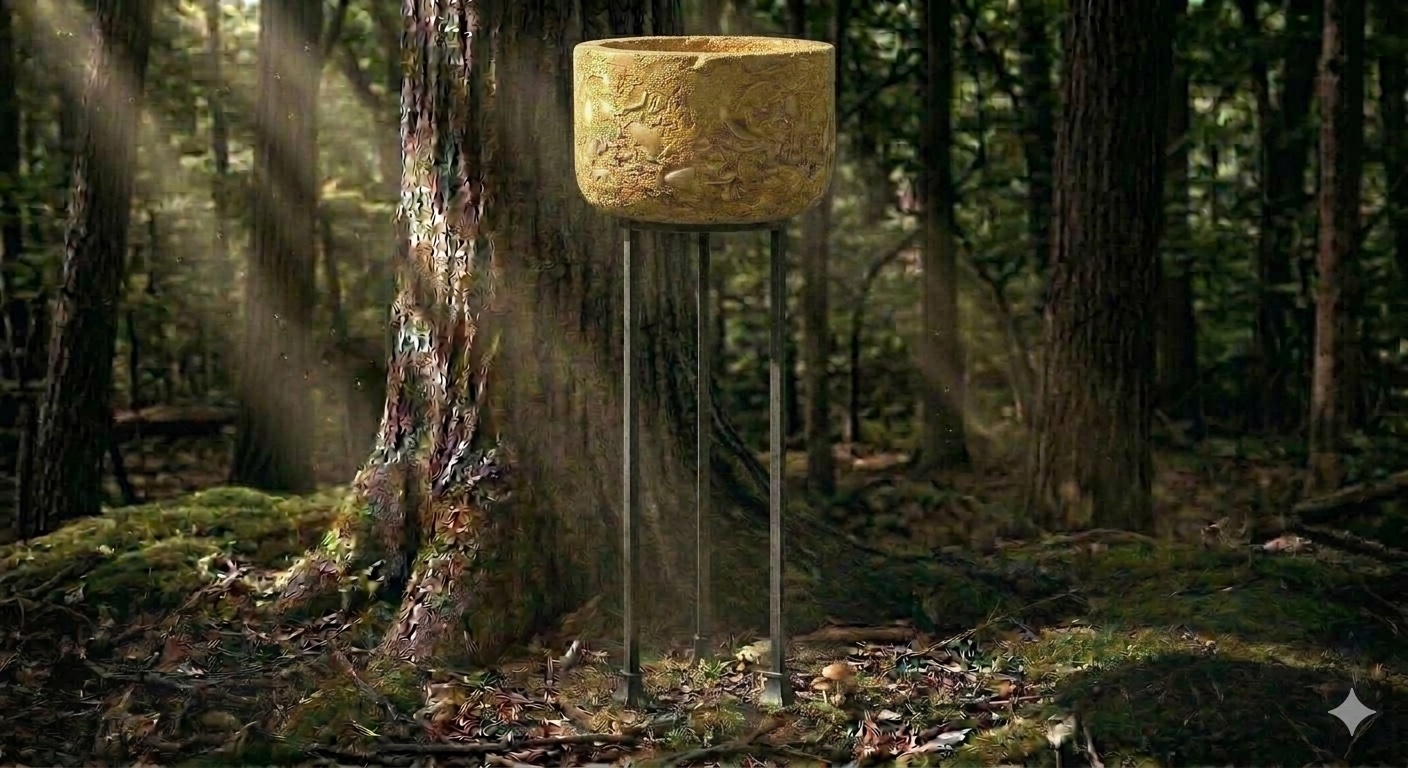
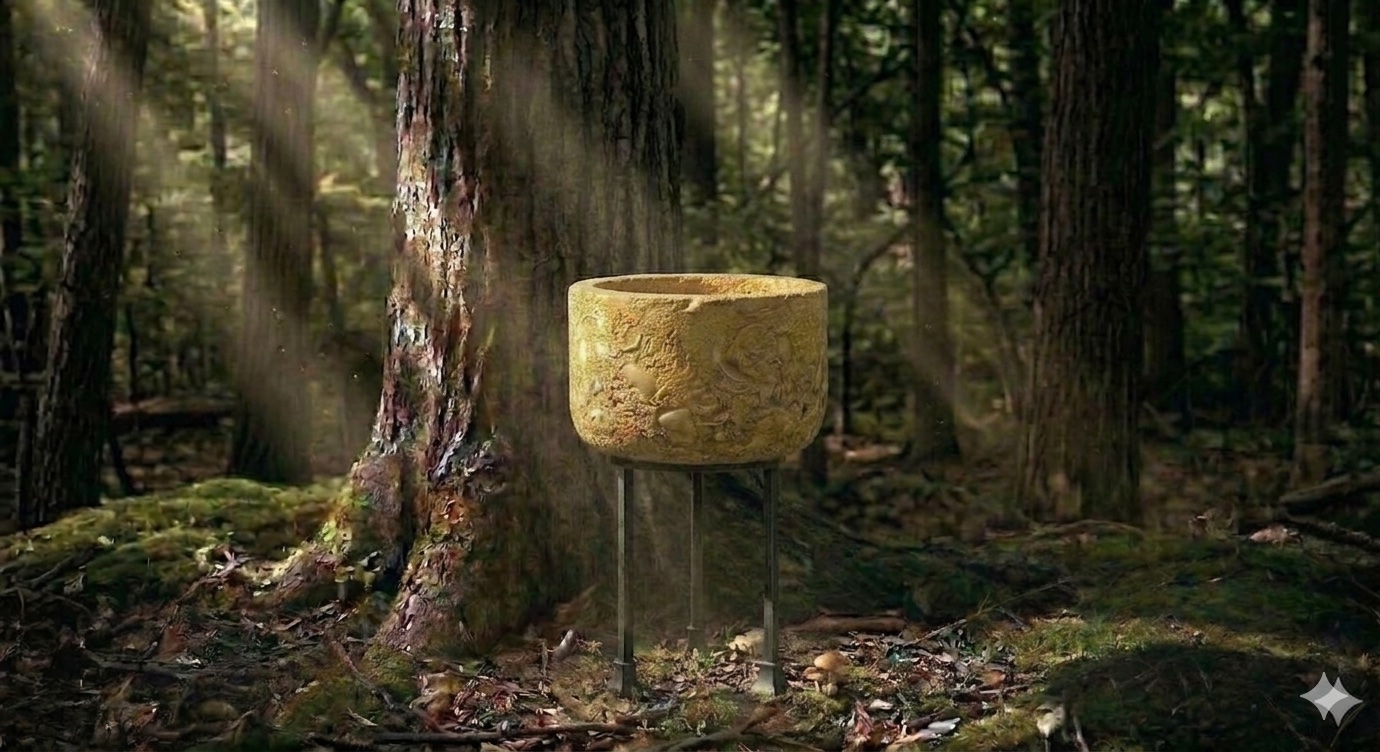
Untitled Time proposes a new unit of duration — transit time — the open interval between letting something go and its coming to rest. An ending no one can schedule, kept by hands other than your own. The instrument is a stone bowl, pierced so it holds nothing. Each stone carried away from it starts a clock that belongs to someone else.
The Untitled Duration
A visitor lifts a small stone from the bowl and carries it elsewhere — across the woods to another vessel, across an ocean, or not at all.
The interval of that journey is indeterminate: minutes for some, decades for others, a lifetime for the rest. This is the untitled duration — time completed not by a mechanism, but by human agency, chance, and other hands.
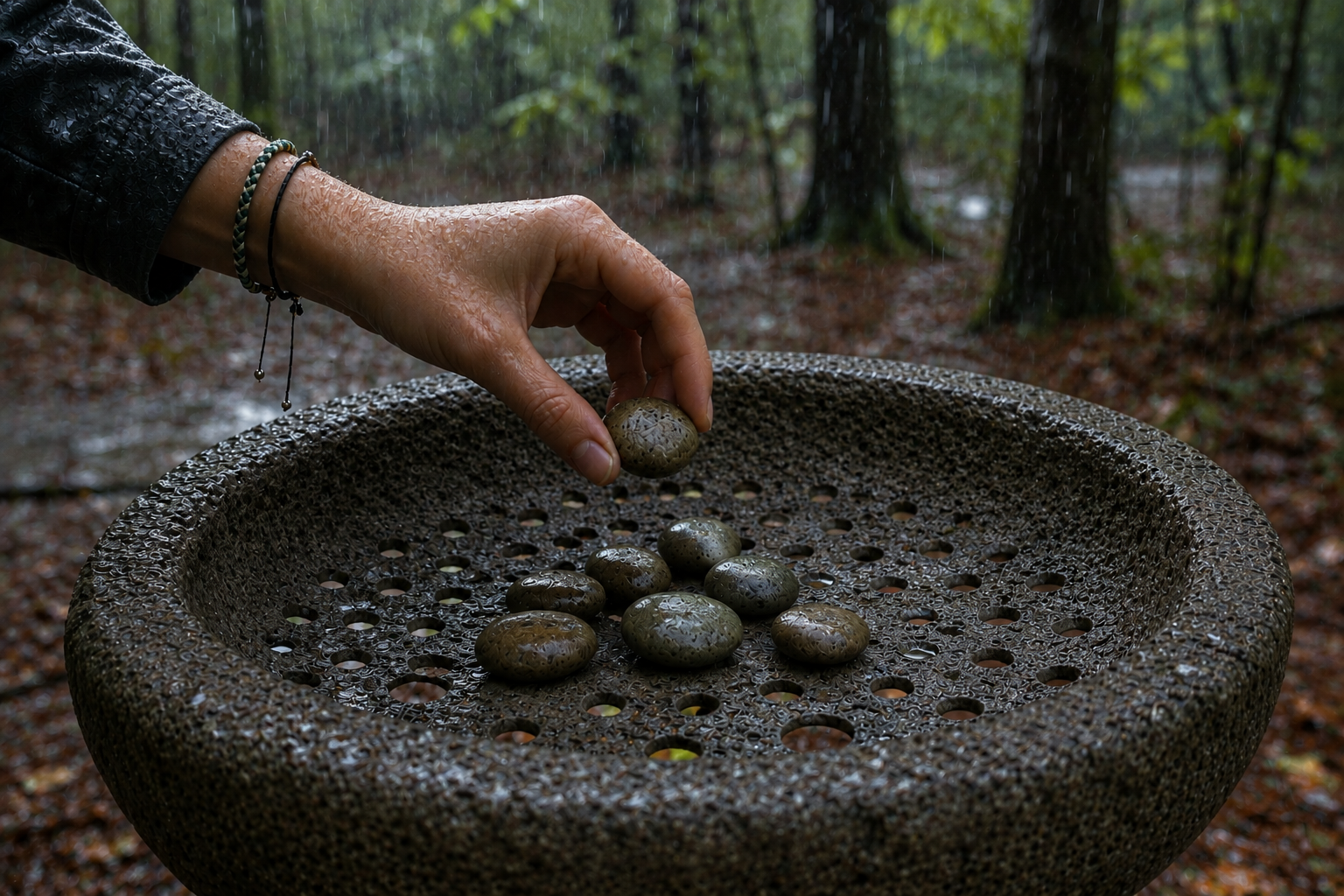
Time that is empty rather than full; held rather than measured; finished by hands other than your own.
The Functional Void
Most instruments fill an interval and report it. This one does the opposite. It is built around emptiness — rain, light, and leaves pass straight through without accumulating.
We shape clay into a vessel, but it is the emptiness inside that makes it useful. Laozi · Dao De Jing, Ch. 11
In place of a reading, the vessel offers a gap: the narrow, charged distance between your face and its reflection. Time, here, is read inward — the interval that makes memory, contact, and attention possible at all.
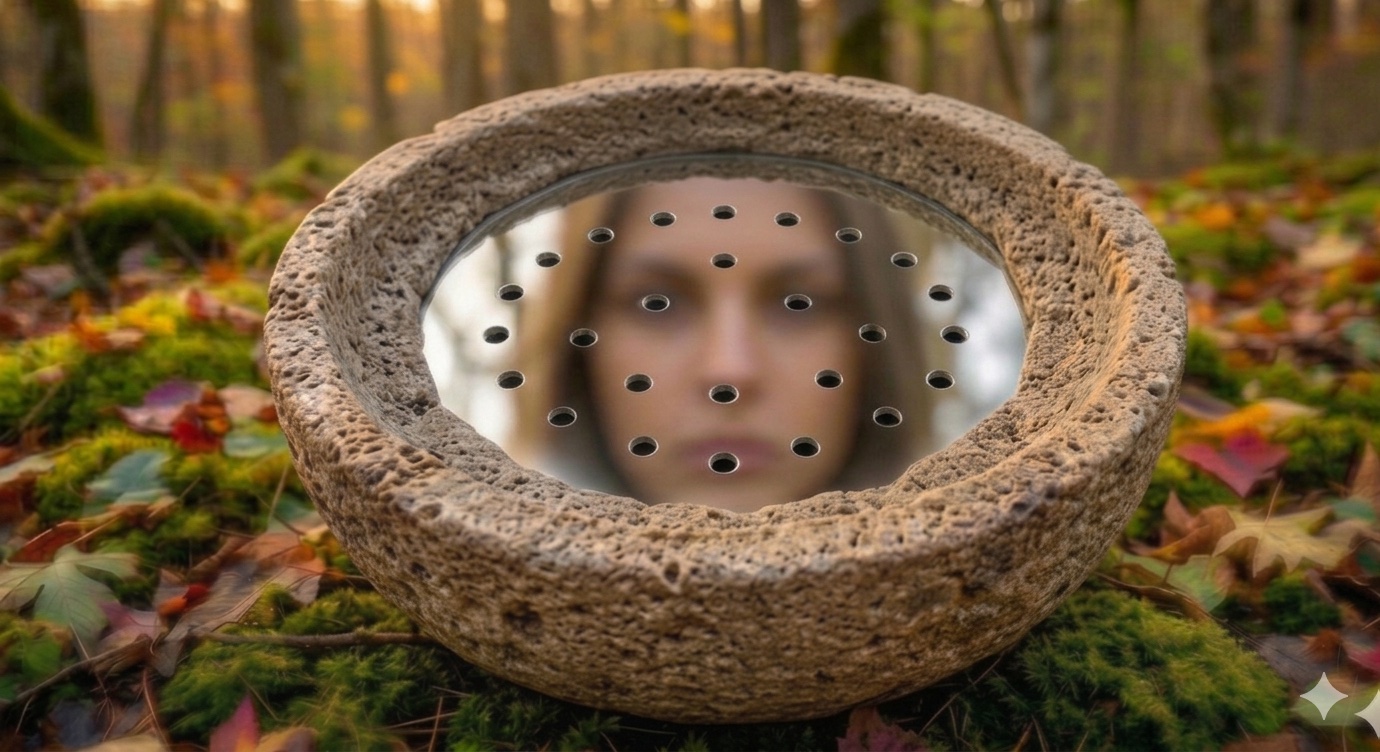
A clock that fills nothing, and so keeps the only time that cannot be counted.
Shifting Dipper, Still Center
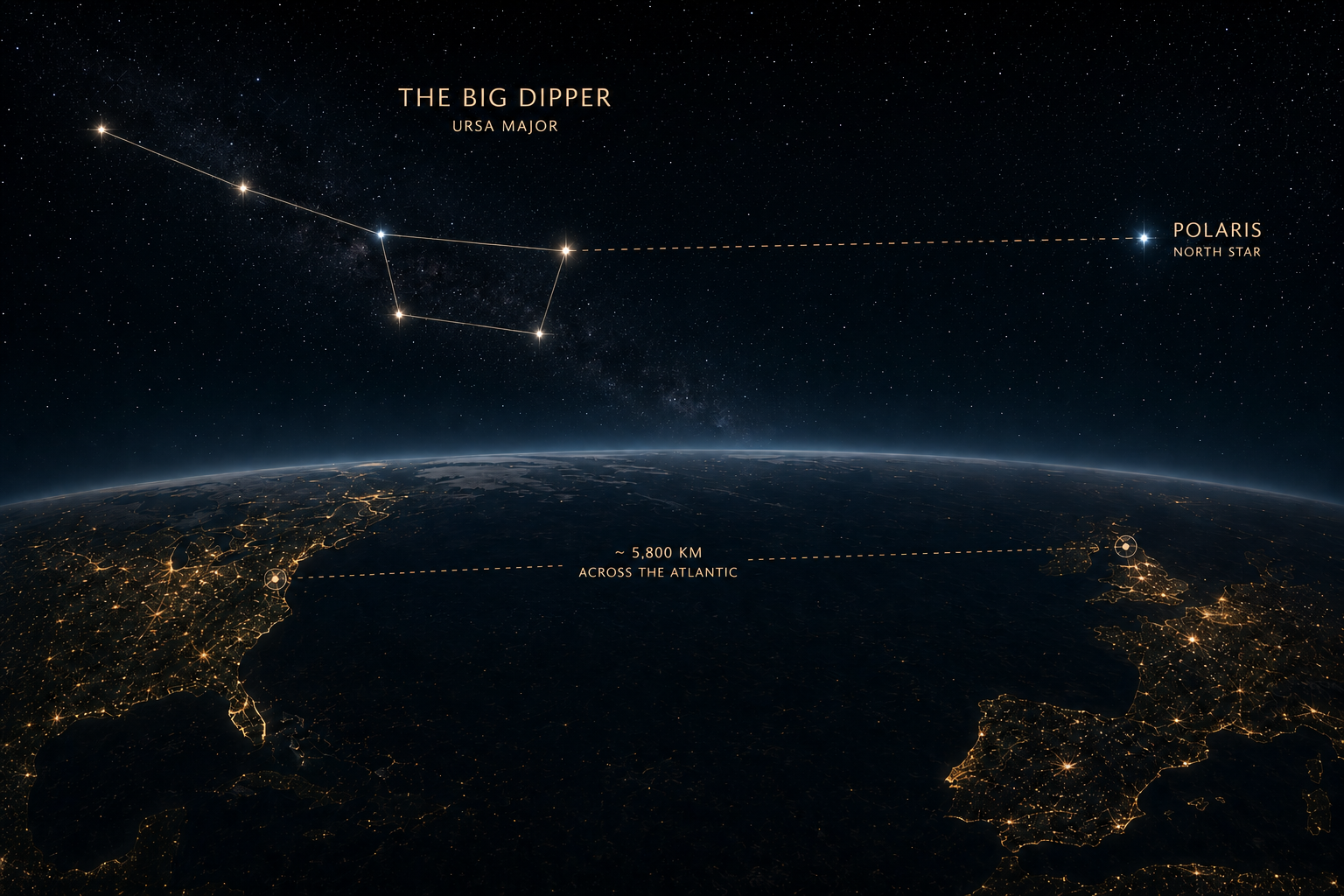
Untitled Time is not a single monument but a network: vessels set into the old-growth canopy of College Woods in the figure of the Big Dipper, anchored by a central Polaris node.
It draws the paradox of the I Ching into the ground — the interplay between constant cyclic change and the one unmoving pivot.
Seven kindred stone bowls scattered along the trails. They age asynchronously — moss claims one faster, a different canopy alters the light on each mirror. They embody the constant flow of time.
At the heart of the network sits the anchor. Unlike the seven draining bowls, this larger basin holds water — a still cosmic axis, the quiet pool where the downward flow finally rests.
The Unmoving Center Is Moving
The still center hides a deeper truth. Polaris is the pole star only for now: Earth's axial precession swings it through a 26,000-year cycle, and the North Star will drift from north.
Aligning the woodland to Polaris today fixes a single instant in cosmic history. The unmoving center is itself moving — a piece of architecture built for a sky that will not stay still, tying the geology underfoot to the geology overhead.
We anchor to a star that is already leaving.
Carved From Time Itself
A bowl carved from fossil stone, raised on slender supports in a forest clearing. Behind a field of drilled holes, a convex steel mirror returns your face — brief and curved against deep time.
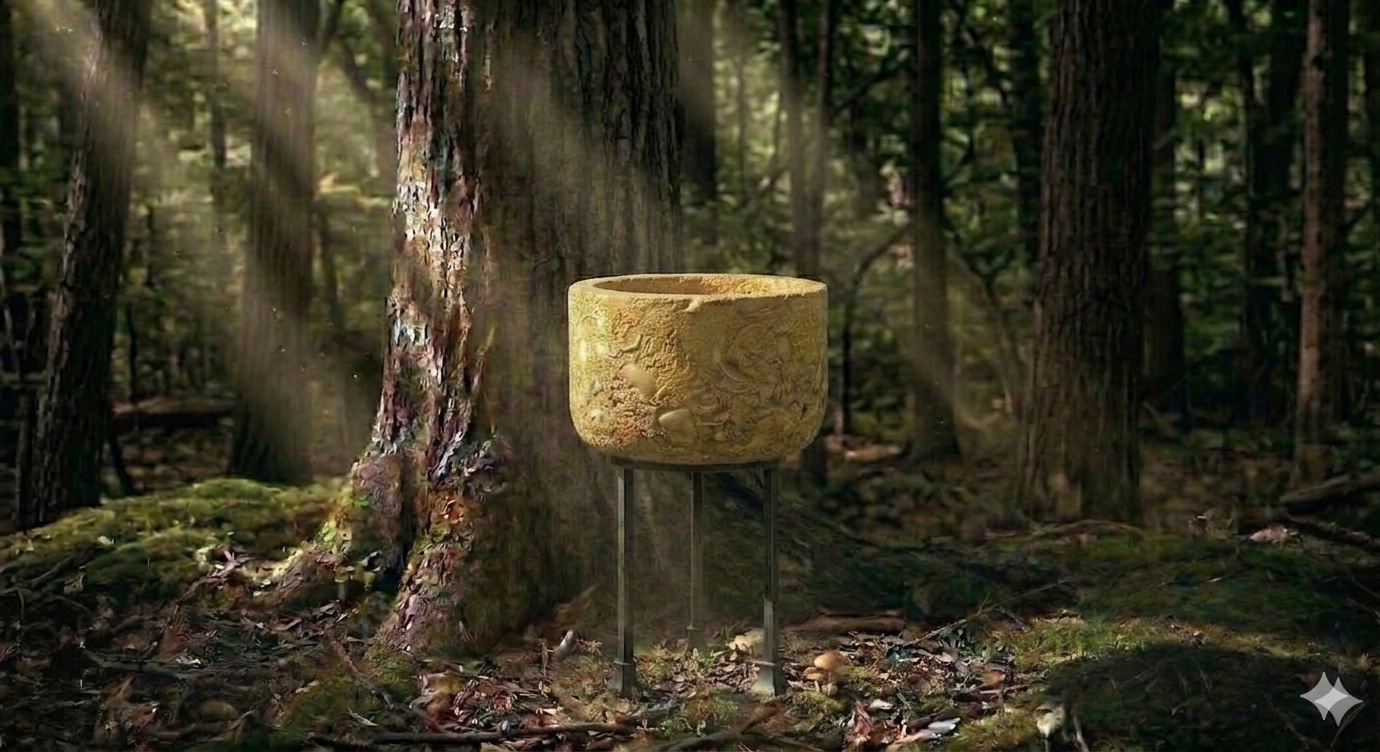
The work spans continents. A sister vessel stands at the University of St Andrews, in Scotland. Each site is cut from its own stone, so each becomes its own clock.
Each site meets a single body twice. Every vessel exists at two heights — a person meets the work differently across a lifetime; a parent and a child meet it differently in the same moment.